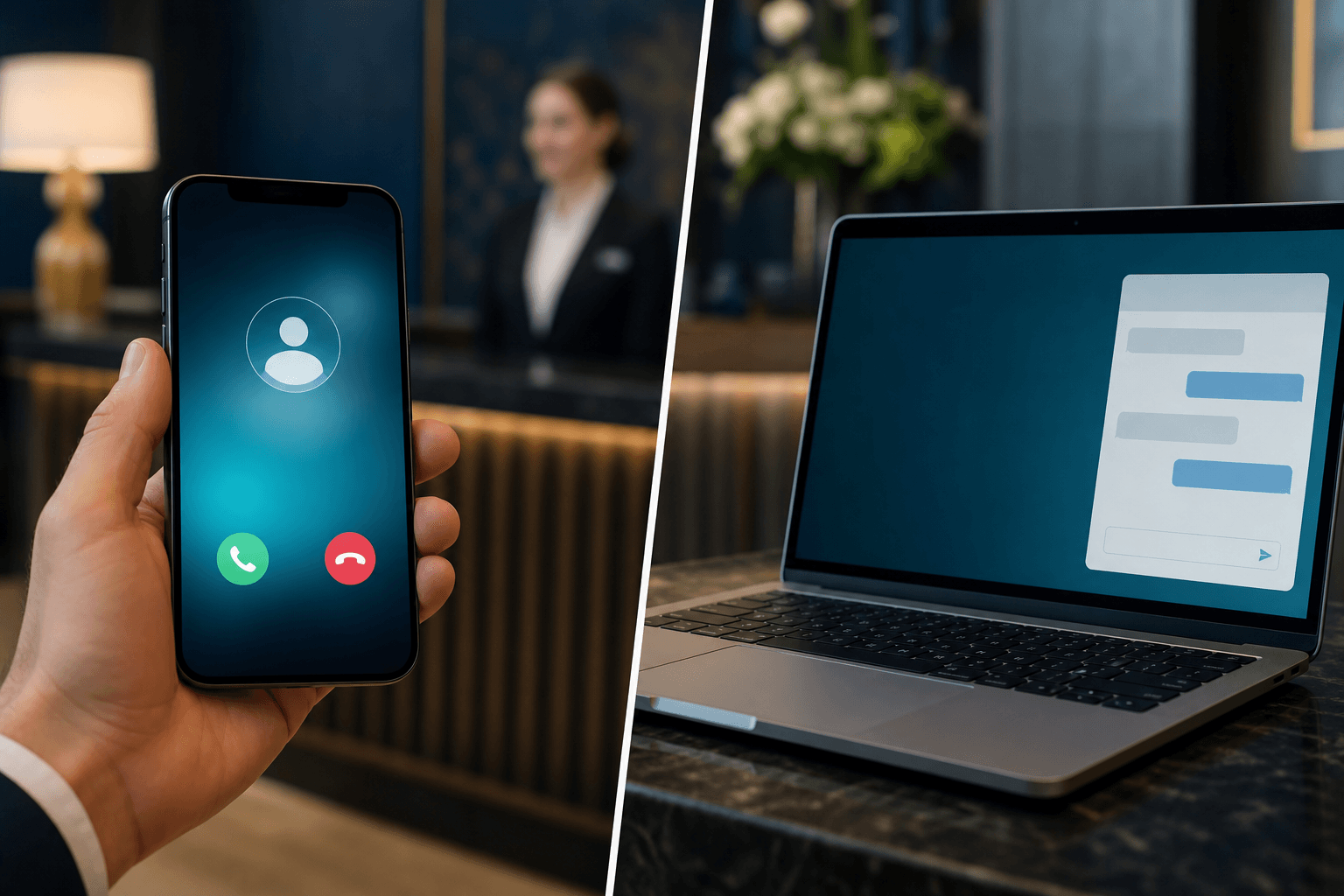
Basic website chatbots exploded everywhere. They're fine for visitors already browsing with intention. They don't reach the traveller calling from the airport, the parent ringing from the car park, or the diner who saved your number last month and dials it now.
Local businesses still get a lot of booking intent by phone. Directories, Google Business profiles, and old loyalty send traffic to the number on the door. If that number hits voicemail while a generic chatbot waits for a click that never comes, you've under-covered the phone — not proven that websites don't matter.
Voice AI in 2026 finally sounds natural enough that callers book without feeling stuck in a phone tree. ReceptionSit answers that line — and the same receptionist can also handle website chat and an on-site AI voice button for visitors who never dial.
The strategic move isn't phone vs chat as a rivalry. It's matching the interface to the habit. Booking intent arrives as a ring → answer the ring. Browse intent arrives as a session → website chat or on-site AI voice can book too. Most restaurants, clinics, and hotels still need both doors covered.
Test it simply: for one week, track bookings from phone calls vs. website visitors. Put AI on the line for dialers, and add chat or on-site AI voice for people already on your page. One receptionist, the doors your customers actually use — typically live in about 48 hours.